Scholarship Under Autocracy
We Have Been Here Before

I want to paint a picture of what scholarship is like when autocracy has taken hold, based on experiences from the 20th century. Specifically, I want to map the spectrum of choices—ethical, professional, and intellectual—available to scholars under autocracy. First, a disclaimer: I am not a historian, not even a historian of science. I am a cognitive psychologist. But I was born in the Soviet Union, grew up in East Germany, studied Psychology at Moscow State University and then did my PhD and worked at Humboldt University in East Berlin. That makes me one of a vanishing breed of those who remember what academia was like under the 20th-century autocracies behind the Iron Curtain.
The fall of the Berlin Wall was an event I witnessed from as close as one could possibly be – my flat was literally just ten meters away from it. Even just three months before it happened we never saw it coming. This experience made me acutely aware of how quickly societies can change. Or, to put it in nerd speak, there are moments when one must rather rapidly update one’s priors of how society works. I fear we may be at such a moment again.
Having been born into that system, I grew up surrounded by Marxist-Leninist propaganda—clumsy, often absurd, yet inescapable. Late-stage ‘real socialism’ was a world where most people paid lip service to ideology, fully aware that its principles did not work in practice. Dissent, when it did surface, often sought to ‘correct’ distortions of ‘true’ Marxism rather than advocate for liberal democracy or a market economy. My reflections are therefore shaped entirely by hindsight, gained from living in the US in the 1990s and then in the UK. My point is that if autocracies take hold, those who grow up within them will not be able to recognise the system for what it is. This is why understanding the choices available to scholars under autocratic regimes is critical—for only then can we determine how to preserve the knowledge of what scholarship is meant to be.
One might argue that the communist party-states behind the Iron Curtain were fundamentally different from today’s extant and emerging kleptocratic autocracies and, hence, reflections on the past bear no relevance for today. Indeed, those regimes were ideologically driven; the party-state wielded ideology primarily to consolidate power rather than accumulate wealth. Yet in my view (though I am not a political scientist) there is a distinct ideological slant —techno-libertarianism—uniting various factions in their current onslaught on liberal democracy. This emergent ideology frames democracy as an impediment to the freedom of the elites and to technological advancement (££); its propagandists exploit it in the pursuit of both power and wealth. Given the rapid erosion of democratic safeguards we are witnessing, perhaps we can look to the past to understand the range of personal choices that may remain for academics and scholars under autocratic rule.
Scholarship in the USSR, the GDR and other Eastern bloc countries was marked by three characteristics: resource limitation, information restriction and ideological interference. On the one hand, the ruling party-states supported scientific endeavours that would bolster industrialisation and defence capabilities against the West. Disciplines such as mathematics, natural sciences, and engineering received substantial support, offering scholars a degree of security and respect. Notably, fields like nuclear physics in the USSR or microelectronics in the GDR were granted significant funding and resources. But even state-favoured disciplines eventually faced challenges from Cold War economic sanctions and the lack of hard currency. This restricted access to the international research literature and necessitated much reverse-engineering of Western technology. Consequently, scholars often concentrated on theoretical research that required minimal resources like mathematics or theoretical physics, often with impressive results.
On the other hand, social sciences and humanities were under tight ideological control. The general picture was one where the natural sciences were called upon to improve economic productivity and defence capability, while the social sciences had to shape society in accordance with ideological doctrine (££). Access to the international scholarly literature was either curtailed or under tight party control. During the worst excesses of Stalinism, even the life sciences were not spared from ideological interference. The most egregious and well-known example is that of Lysenkoism - a Lamarckian approach that rejected Mendelian genetics as a ‘bourgeois pseudoscience’ and promoted the idea of inheritance of acquired characteristics, in line with Marxist-Leninist ideological principles, goals of Soviet agriculture and the desire to breed the ‘Soviet man’ through change of living conditions. Imposing this dogma set Soviet biology, genetics, and agriculture back by decades and led to the imprisonment, execution, or death of numerous scientists.
While Lysenkoism was blunt, not all ideological meddling in science was easy to identify from inside the system. Only much later did I learn about ideological culls that had affected my own discipline, psychology. One area conspicuous by its absence from our curriculum was standardised psychometric testing. Psychometric testing was one of the tools used in the field of paedology which had emerged in the Soviet Union in the 1920s as the study of environmental conditions and inherited traits that shaped child development, with the aim of optimising educational outcomes, e.g. through streaming children according to abilities. But in the 1930s, party elites realised that acknowledging inherited psychological differences between humans conflicted with the Marxist-Leninist emphasis on the primacy of social conditions in shaping behavior. Paedology was branded a bourgeois reductionist science, and because it had so far failed to deliver the required educational improvements, it was banned by decree of the Central Committee of the CPSU in July 1936. For psychology, this curtailed the study of individual differences; it also put the onus of children’s academic success entirely on teachers, making them the target of reprisals if such success was not achieved (££).
As the New York Times columnist M. Gessen remarked in a recent interview, living under autocracy is dangerous for those who speak out but for most who do not it is often just …dumb. In academia, inconsistent enforcement of ideology could lead to absurd paradoxes: In the Soviet Union, Sigmund Freud’s works were translated and, by the 1980s, included in Psychology curricula as required reading, as Freud’s theories were interpreted as supporting a materialist approach to the human psyche, compatible with Marxist thought. In contrast, in East Germany, Freud’s work was heavily restricted, as psychoanalysis was considered an individualistic, Western theory at odds with the Marxist emphasis on social determination. This is why, even as a German speaker, I was only able to read Freud in Russian—Freudian psychoanalysis was not part of Psychology curricula in East Germany, and only limited academic editions were available.
These examples are intended to show that ideological control did not just result in mis- and disinformation but, in many cases, in lack of information, about theories, fields of research, and entire disciplines. Scholars born into an autocracy are not able to fight for the academic freedom to pursue what they do not know about.
What choices did academics and scholars have to make under such circumstances? I suggest a categorisation of behavioural strategies that is based on recollections of my own lived experience and on some historical accounts. It is an attempt to map out the behavioral affordances for academics in autocracies. I deliberately present a typology of behaviours rather than of individuals because individuals could transition from one strategy to another over the course of their lives. These behavioral strategies can be organised on a continuum of ideological alignment (see Figure 1); the examples are of scholars who followed them at some point, even if not consistently.
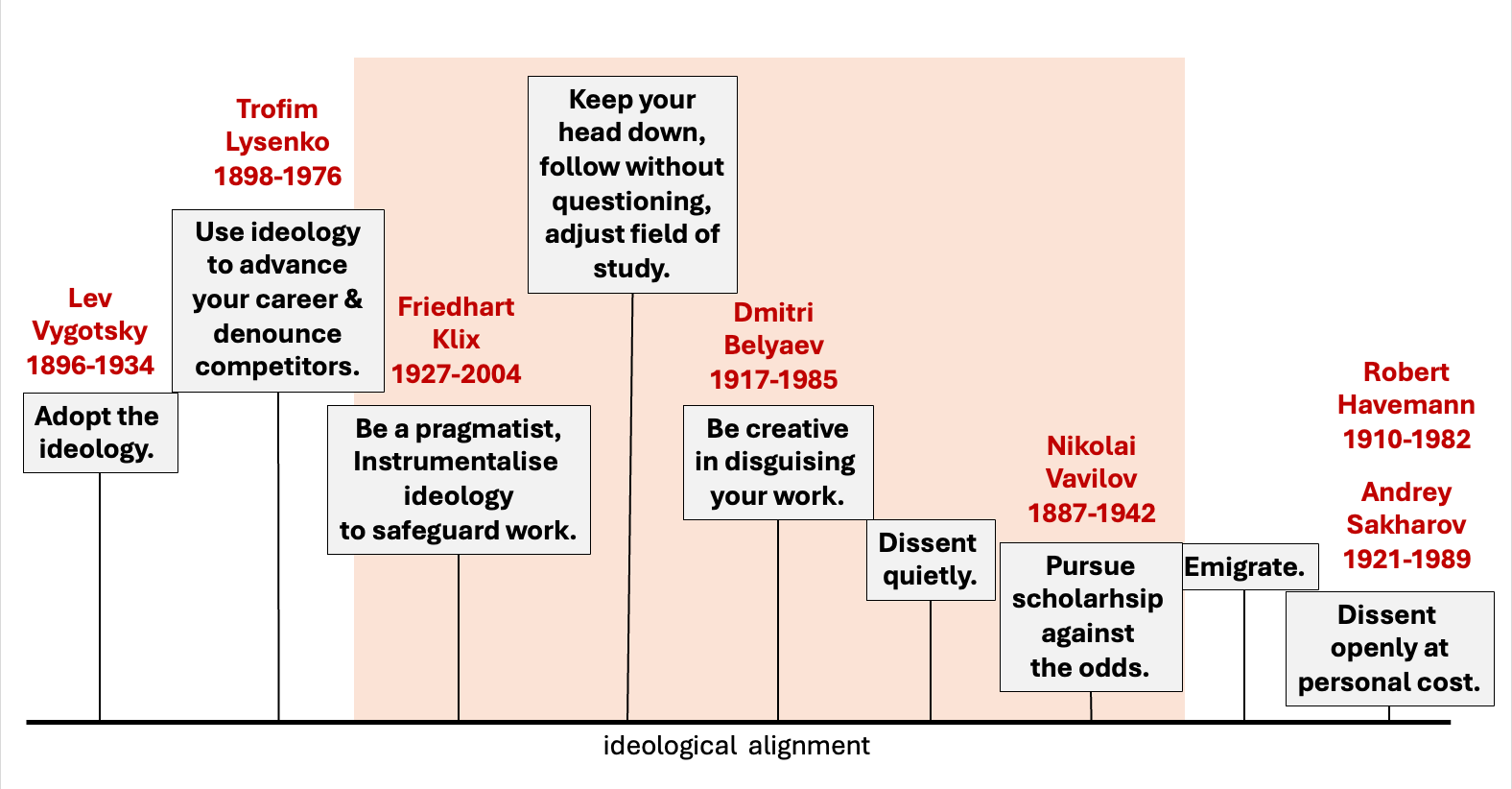
Figure 1: Choices faced by scholars in communist states like the USSR and the GDR.
The resemblance to a frequency distribution is intentional, although quantitative data are not available—the estimates reflect my intuitions.
Adopt the mainstream ideology. Some scholars genuinely embraced Marxist-Leninist ideas and integrated them into their work. For example, Lev Vygotsky sought to align his cultural-historical approach with dialectical materialism in the analysis of human cognitive capacity, though his ideas were later partially suppressed for their Western influences, e.g. engagement with the work of Jean Piaget. Others were dogmatists, who aligned their scholarship with mainstream ideology in superficial and opportunistic ways, like Trofim Lysenko, who destroyed Soviet genetics by postulating the inheritability of acquired characteristics and even ‘correcting’ Darwin with the claim that there is intra-species cooperation in plants, all with devastating consequences not just for biology and genetics but for agriculture and food supply.
Use ideology to advance your own career; denounce competitors. It was not uncommon for scholars to concoct or promote findings that appeared to support mainstream ideology, hide findings that would challenge it, ingratiate themselves with the political leadership and accuse their competitors of ideological treason and of standing in the way of progress—a strategy that would often lead to personal advancement. Again, Trofim Lysenko serves as an example: having been installed as president of the Academy of Agricultural Sciences, his open opposition to genetics contributed to arrest, imprisonment and death of thousands of Soviet biologists, including the eminent biologist Nikolai Vavilov, who died of malnutrition and mistreatment in a Saratov prison at age 56.
Be a pragmatist; instrumentalise ideology. Some scholars sought positions in the party hierarchy, entering a ‘Faustian’ bargain with the calculation that preemptive alignment with the powers that be could safeguard their work and that of their colleagues and students. Ideological conformity served as a means to an end. I suspect that my PhD adviser Friedhart Klix used this strategy to keep Psychology (££), especially at Humboldt University in Berlin, on an empirical and relatively ideology-free basis.
Keep your head down, follow along without much questioning and adjust your field of study. This is what most of us did. It allowed us to grumble about the system in private while not jeopardising our careers. And while this may sound weak and fallible, it is important to remember that dissent was dangerous; it involved risking not just one’s career but one’s livelihood and—under Stalin—one’s life, as well as misery for one’s family. But even this ‘easy’ option required considerable ingenuity to adapt to the limitations in information and resources.
Be creative in disguising your work. Sometimes scholars managed to ‘outsmart’ the system by making their work look ideologically acceptable and strategically relevant. I recently learned that the famous study of the domestication of silver foxes by Dmitri Belyaev and Lyudmila Trut was presented to the authorities as an initiative to increase Soviet fur production (££). Its real aim was to study the genetic basis of how selection for a behavioural trait like tameness manifests in the physiological markers of the domestication syndrome. But when the study started in 1958 genetics was still banned so a disguise was needed.
Dissent quietly. Some scholars sacrificed their careers to pursue scholarship outside of mainstream institutions. This involved giving unofficial lectures and seminars conducted either in private residences or without official permission or in unexpected places. For example, the seminars that eventually revived genetics in the 1950s were held at mathematical and physical institutes. For many scholars this meant taking on jobs in low-tier universities or outside of academia to make ends meet.
Pursue scholarship against the odds. Some scholars tried to maintain scientific and intellectual integrity, but if their field of study did not conform to mainstream ideology and the research was not officially sanctioned because of strategic relevance, or, worse, if it was seen to contradict ideological dogma, the chance of success was extremely low. A few scientists, like Vladimir Vernadsky, retained a degree of independence on account of their international reputation, apolitical stance and usefulness. Most others, however, were denounced, persecuted and, like Nikolai Vavilov, lost their lives despite considerable international reputation.
Emigrate. Some scholars eventually went abroad, though emigration was highly restricted and often required international recognition or political pressure to be granted permission. In East Germany, those considered to be in opposition to the party-state could be stripped of their citizenship and made to leave the country.
Dissent openly. Engaging in open dissent without losing one’s life became only possible in the post-Stalinist period, though dissenters still faced exile, imprisonment, or forced psychiatric treatment. But even then only very few scholars had a large enough international reputation that the authorities did not dare harm them. Many dissidents initially had been loyal believers in communist ideals and actively engaged in dissent after becoming disillusioned; prominent examples are the Soviet nuclear physicist and Nobel Peace Prize laureate Andrey Sakharov, who spent years in internal exile, and the East German chemist Robert Havemann, who was placed under prolonged house arrest.
Without doubt, the specifics of my categorisation can be debated and refined with deeper historical knowledge. Yet even this broad and approximate categorisation offers some insight into how integrity of scholarship might be preserved. I will therefore conclude with a brief list of options that existed in the middle of the continuum of ideological alignment (the orange area in Figure 1) and explore potential parallels to the present.—If one is unwilling to embrace the new masters, unable to leave, and finds open dissent too great a risk, can the past offer any guidance on what remains possible? The following list expands on some of the points made above.
Develop alternative dissemination methods. The word ‘samizdat’ (meaning ‘self-publication’) has by now made it into the English language. It was a system of underground copying and dissemination of censored and prohibited materials, often using everyday technologies that could be adapted to evade state control. While the bulk of samizdat was used to spread banned poetry, literary works, and political texts, there was also a niche movement that circulated banned scientific publications, particularly in areas like genetics, sociology, and political science, as well as Western scientific literature that was inaccessible without political clearance.—Lessons for today: While the days of producing carbon copies using typewriters are certainly over, the threat of ideological constraints and funding restrictions on research dissemination may force the scientific community to accelerate the move to diamond open access publishing, housed on servers of autonomous bodies or universities willing to continue their support.
Move scholarship into non-traditional spaces away from mainstream institutions. Forbidden scholarly discourse often took place in private residences or inconspicuous venues like institutes of other disciplines. I already mentioned the seminars on genetics that were conducted in mathematical and physical institutes to circumvent official scrutiny. Some genetics research was covertly conducted in chemistry or radiology labs. I recall participating in meetings of followers of the Moscow Methodological Circle, which were held in the smoking areas of my dormitory. While I did not perceive these discussions as subversive, Georgy Shchedrovitsky’s movement was not tolerated within mainstream Soviet academia so the intellectual engagement had to happen outside of it.—Lessons for today: Current technologies undoubtedly offer much potential to develop alternative spaces for independent scientific exchange. The collective move of many research communities from X to Mastodon and Bluesky confirms that online mass migrations can happen at scale and in a timely manner. Outlets like the Open Science Framework are precedents for an independent scholarly infrastructure which should be extended and utilised when mainstream science is under threat.
Disguise your work behind ideologically acceptable aims. Not only was the taming of silver foxes presented as a strategy to boost fur production, but defence resources were frequently repurposed to advance space exploration, despite initial reluctance by Soviet authorities. In East Germany, empirical psychology was ostensibly promoted as a means to enhance workers’ productivity, persuading party leaders of its utility.—Lessons for today: In the present situation, we may need to start recognising the dual-use potential of research on climate change, public health, mis- and disinformation, and social inequality to cleverly embed it within the broader narrative of technological advancements in AI and robotics.
Be prepared for the possibility of having to choose between scholarship and career. The history of scholarship behind the Iron Curtain has shown that in some circumstances scholarly integrity may no longer be compatible with career advancement. When faced with ideological constraints and resource limitations scholars may have to consider alternative paths of intellectual engagement, alternative institutions or even alternative places of employment.—-Lessons for today: These will be difficult and deeply personal choices. My hope is that reflections on the past such as these can at least alert scholars and academics under threat to the possibility of having to face such choices —so that, if and when the moment comes, you will be prepared.
As the adage goes, history never repeats, but it rhymes. Autocracies of the 21st century differ from those of the 20th, just as the nature of scholarship has evolved—now globally interconnected and technologically enhanced. I have no doubt that today’s scholars and academics will resist and fight back. Perhaps this reminder from the past about what the worst-case scenario might look like can help to galvanise such efforts.
Human ingenuity makes all so resilient. Such a hopeful message during turbulent times.
I am thinking of Milosz’s concept of Ketman… and where it might fit (in the orange area?).